Why Is Visual Hierarchy Important?
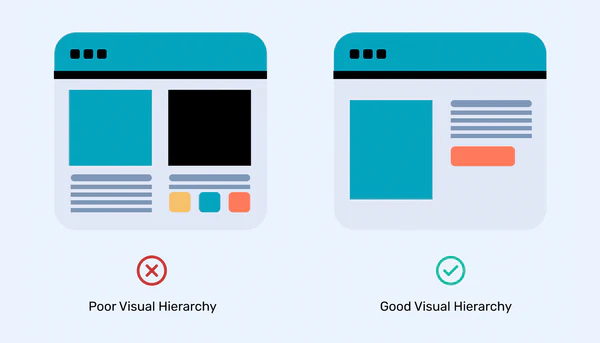
One of the most important design principles—particularly in web design, user interface/user experience, and content design—is visual hierarchy. It is the arrangement of elements in such a manner that directs the attention of the viewer in terms of importance. Simply put, visual hierarchy directs users on what to see first, second, and third when they visit a page.
In the current digital era, where people are busy and have limited time, they do not read all the words on a web page. Instead, they scan. This is the reason why visual hierarchy is important in ensuring content is clear, engaging, and effective. Even the most valuable information may remain unnoticed without it. A well-organized visual hierarchy enhances readability, user experience, and conversions by organizing users through content in a natural manner.
What Is Visual Hierarchy in Design?
Visual hierarchy refers to the display and arrangement of design elements in a manner that indicates significance. Designers rely on size, color, contrast, spacing, alignment, typography, and positioning to provide a clear direction to the eye.
For example, a headline tends to be bigger and bolder compared to body text. The call-to-action button could be in a bright color that is conspicuous in relation to the rest of the page. Such decisions are not accidental, but rather deliberate design choices that shape the interaction of users with content.
Visual hierarchy in web design and graphic design is used to make sure that users are not overwhelmed. Rather, they are softly led through information in an organized manner. This enhances understanding and assists in conveying messages better.
Why Visual Hierarchy Is Important
Visual hierarchy is important because of the way people process information. Individuals are naturally drawn to visual distinctions prior to reading text. The size, color, and contrast are wired in our brains, and that is why great visual structure is so strong.
Enhanced user attention is one of the largest advantages of visual hierarchy. When all things on a page appear to be similar, users are not aware of where to pay attention. They can exit the site in a hurry since the experience is confusing. But with the application of hierarchy, the user is attracted to the most significant items first, which may be headlines, key messages, or calls to action.
Improved readability is another advantage. An effective hierarchy divides content into digestible parts. It is simpler to scan and locate pertinent information when headings, subheadings, and spacing are provided. This is particularly critical to mobile users who tend to have little screen space and browse fast.
Communication is also enhanced by visual hierarchy. The primary message of a page can be comprehended effortlessly. Hierarchy can be used to convey the message in a clear and effective manner whether it is a product page, blog post, or a landing page.
SEO-wise, visual hierarchy indirectly contributes to improved performance. Engagement metrics increase when users take more time to be on a page due to ease of reading and ease of navigating. This has the potential to decrease the bouncing rates and dwell time, which is a good indicator to search engines.
How Visual Hierarchy Improves User Experience and Conversions
The way information is organized visually has a significant impact on user experience (UX). A visual hierarchy gives a website a sense of ease and simplicity of navigation. Users must not be left to guess where to click and what to read next.
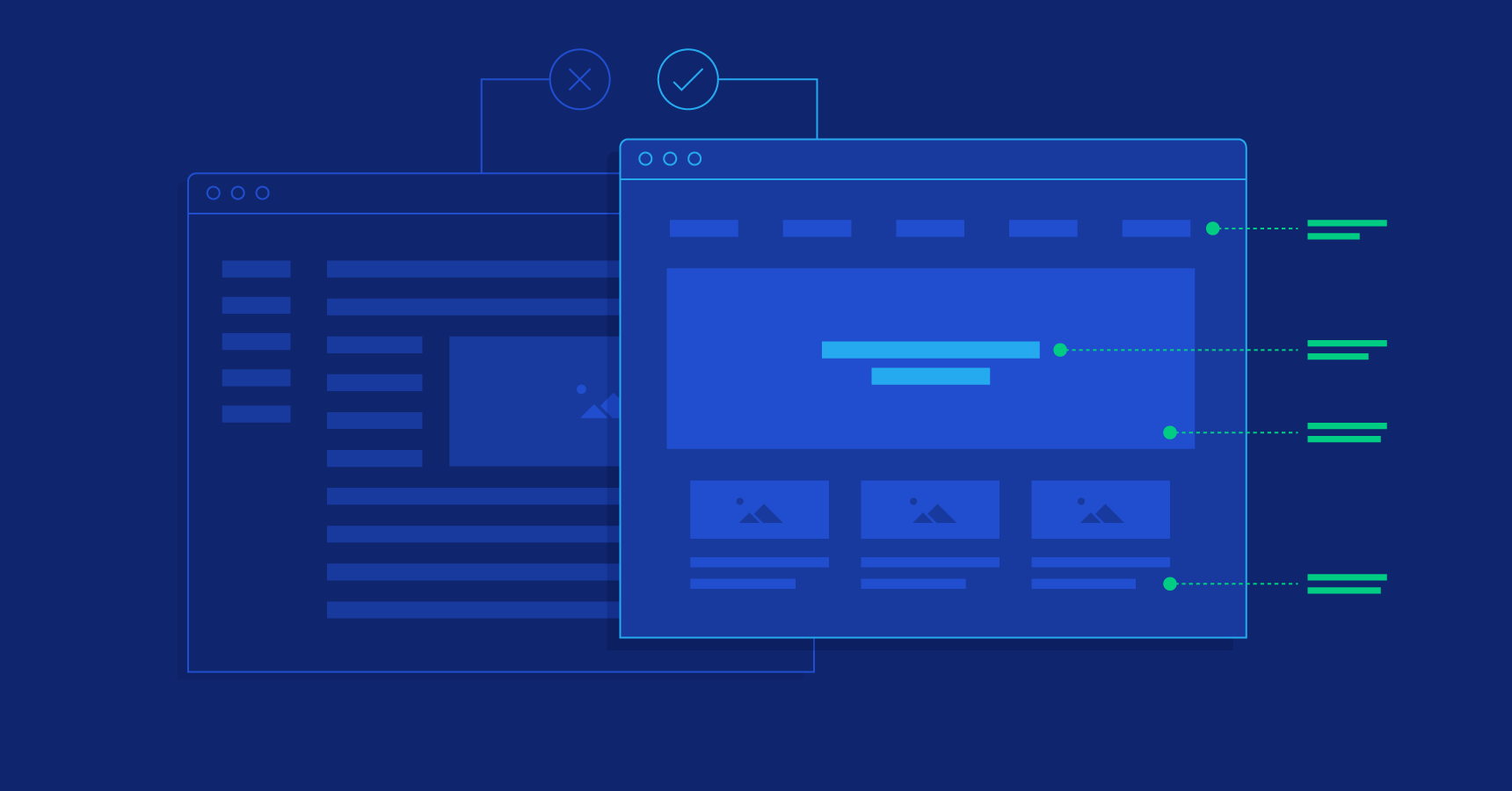
For example, on a properly designed landing page, the most significant message is normally located at the top with a bold headline. Additional information is provided in smaller type, and a prominent call-to-action button is easy to see. This flow helps users to quickly comprehend the worth of the page and then act.
The visual hierarchy is also directly related to the enhancement of conversion rates. Users will tend to do something when they are directed to it in a seamless manner, e.g. sign up, buy, or fill out a form. Lack of hierarchy, however, brings friction. Without the ability to recognize what is important fast, users might lose interest and abandon the page.
Another important aspect is emotional impact. A good visual hierarchy brings about a feeling of order and professionalism. This creates trust which is vital to any site or brand. When a page appears to be disorderly or cluttered, users might doubt its credibility.
Visual hierarchy is necessary in e-commerce, e.g., product images, prices, discounts, purchase buttons. It is easier for customers to make decisions because key elements are highlighted.
Best Practices for Creating Strong Visual Hierarchy
The development of successful visual hierarchy does not presuppose the use of sophisticated tools, yet it presupposes prudent design choices. Using size is one of the most significant practices. Big items are always given more attention, and therefore, headlines must be more conspicuous than supporting text.
Other potent tools are color and contrast. Important actions, such as buttons or links, can be highlighted by bright or contrasting colors. Nevertheless, excessive use of color may decrease its effectiveness, and thus, color should be used sparingly.
Another important factor is spacing. Adequate white space between elements will aid in minimizing clutter while it also enhances concentration. It enables every part to breathe, and it simplifies the content to scan.
There should also be consistency in typography. The use of font sizes, weights, and styles contributes to the creation of a clear reading order. As an illustration, important headings are bold, and supporting details are written in lighter fonts.
Lastly, alignment and layout consistency make the design appear organized. A clean grid system will assist in keeping the order and lead the eye to flow naturally through the page.
Bringing Visual Hierarchy into Practice
Visual hierarchy is a concept of design that has a direct influence on the interaction of users with the content. It dictates what individuals look at, their information processing, and action taking. Arranging elements according to their significance, designers are able to develop more comprehensible, more captivating, and more efficient digital experiences.
High visual hierarchy in web design enhances readability, user experience, and conversions. It also helps in SEO through enhanced engagement and bounce rates. Visual hierarchy is a key to success whether you are creating a landing page, writing content, or designing a web site.
Finally, effective design does not only deal with the appearance of things, but also, it addresses the ease with which users can comprehend and use them. That is made possible by visual hierarchy.